
Eclipse Theia has long been described as the "next-generation Eclipse Foundation tool platform." Today, it has progressed well beyond that - it is a platform that powers production tools and custom IDEs across industries.
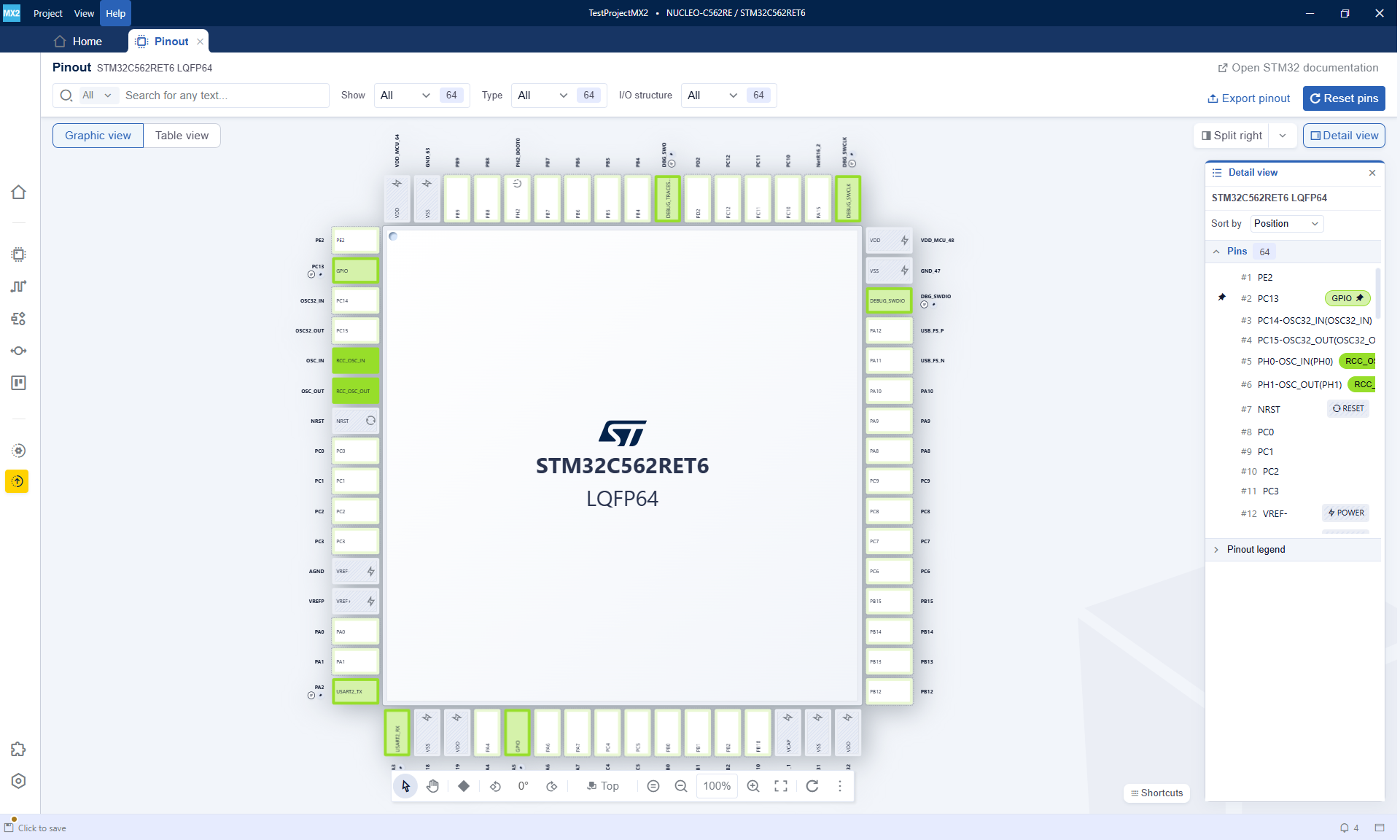
In March 2026, two high-profile releases underscore this. Samsung introduced Sokatoa, a GPU profiling and debugging environment for Android developers, while STMicroelectronics launched STM32CubeMX2, the next major version of their STM32 microcontroller configuration and code generation tool, both built on Theia. These are production tools, developed and shipped by global technology companies, and used at scale.
They are not isolated cases. They are recent additions to a steadily growing set of adopters across industries, from embedded systems and semiconductors to enterprise engineering and education.
Eclipse Theia has become a foundation for building custom, production-grade tools across a wide range of domains. It is no longer a platform to watch. It is the platform in use today.
What Eclipse Theia actually is
Eclipse Theia is not a single thing - and that is worth being precise about, because the confusion is common.
The Theia Platform is an open source framework for building custom IDEs and tools. This includes coding tools, but many Theia adopters cover use cases completely apart from software development. Built on modern web technologies (TypeScript, HTML, CSS), it shares certain components with VS Code, most notably the Monaco editor, and is compatible with the VS Code extension ecosystem, enabling adopters to optionally include a huge range of common IDE functionality and beyond. But it is not a fork of VS Code. Rather, it is an independent framework that allows tool builders to create custom tools that may resemble VS Code in look and feel, or look nothing like it at all, by using Theia's modularity and standard APIs. No forking required. Tools built on the Theia Platform can run as desktop applications or in the browser from a shared codebase, and because it is a platform, not a product, it is invisible by design: organisations use it as the foundation for their own branded tools and IDEs. For many teams maintaining tools built on Eclipse RCP, Theia has become the most natural path forward - a modern, web-based foundation that stays within the Eclipse Foundation ecosystem they already know.
Theia AI is a framework built into the Theia Platform that gives tool builders first-class APIs for integrating AI capabilities into their tools - LLM communication, prompt management, agent orchestration, MCP support, with full transparency and control over data and model choices.
The Theia IDE is the end-user product built on the Theia Platform. It is a modern, AI-native coding tool for desktop and cloud, a vendor-neutral open alternative to VS Code and, with its AI capabilities (e.g. Theia Coder) powered by Theia AI, an open alternative to GitHub Copilot, Claude Code, Cursor and alike.
A project in its prime
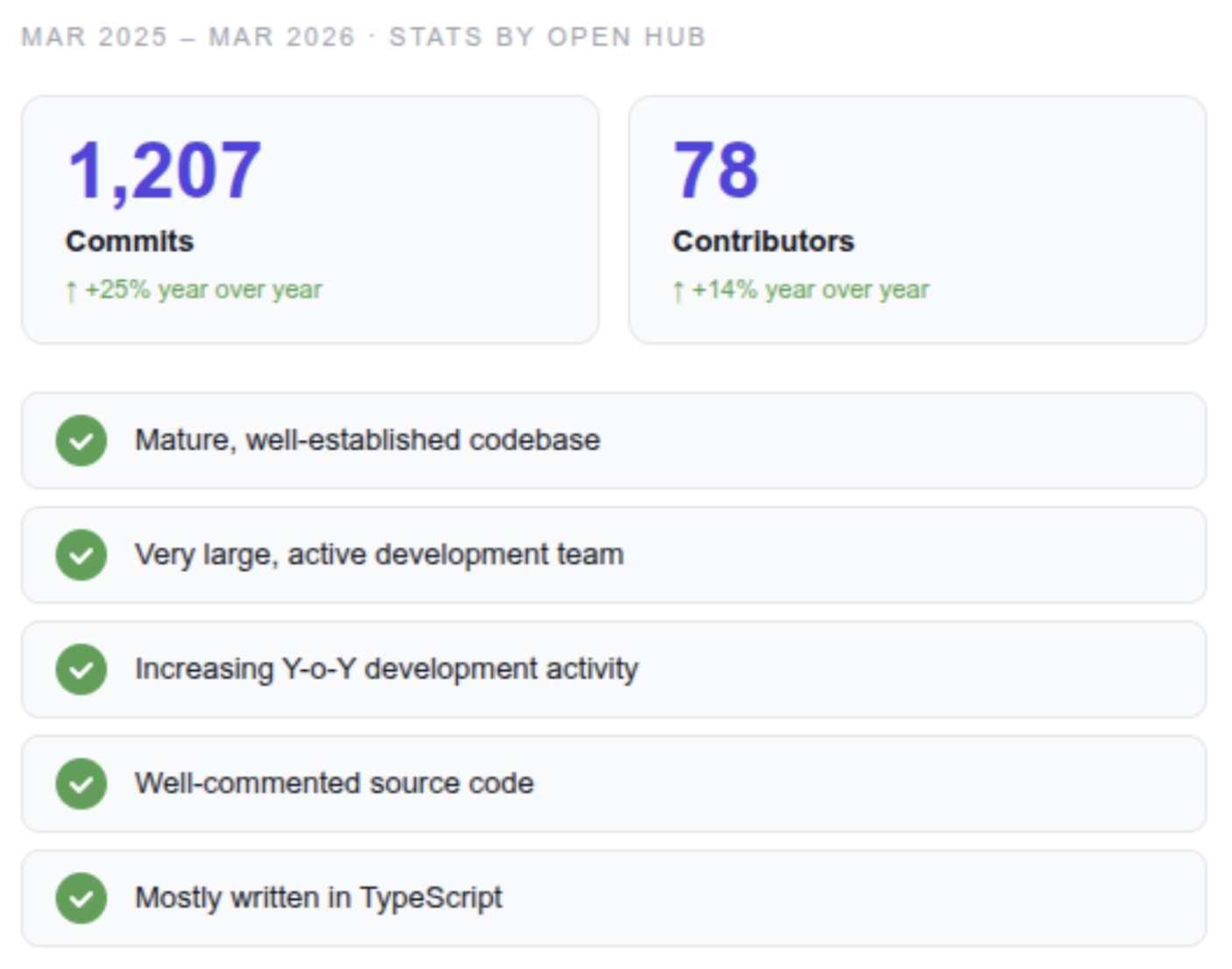
The numbers tell a clear story. The past twelve months were the most active in Theia's history, with over 1,207 commits and 78 contributors - up 25% and 14% respectively year over year. The project ships monthly releases and quarterly community releases, specifically designed for adopters who need a stable, long-term supported baseline. Theia has over 21,000 GitHub stars and maintains continuous VS Code compatibility with every release for years.
But the health of a project is not just numbers. The contributor base is a healthy mixture of large Fortune 500 companies, specialised service providers, and individual open source contributors. Around that contributor core, an ecosystem of companies offers commercial services, sponsored development, and project sponsoring, ensuring that adopters who need professional support can get it. A thriving public discussion forum backs this up in practice: questions do not go unanswered.
What matters equally is the quality of the underlying work - both at the frontier and in the foundations. Theia has a track record of moving early on what matters: Theia added initial MCP support in late 2024, ahead of much of the broader tooling wave that followed, and fully customizable, adaptable prompts were available to tool builders before some of today's AI coding tools had even shipped. At the same time, the project does the unglamorous work that enterprise adopters depend on: For example, a Software Bill of Materials (SBOM) ships with every release to support supply chain security, and in 2025, the codebase was migrated from deprecated PhosphorJS to the actively maintained Lumino library without breaking adopter APIs. This is a project that innovates and maintains - not one at the expense of the other.
AI-native and open by design
Theia AI, the framework that allows tool builders to integrate AI capabilities into their IDEs and tools, reached general availability in March 2025, earning the 2025 CODiE Award for best open source development tool shortly after. That recognition matters, but so does what it signals: you do not ship a production AI framework on top of an unstable platform.
Theia AI takes the heavy lifting out of AI integration. Tool builders get first-class APIs for LLM communication, prompt management, agent orchestration, MCP support and more - and can create and iterate on domain-specific AI agents that feel natively integrated into their tools, not bolted on. Adopters are already shipping real products on this foundation: AMD/Xilinx integrated Theia AI into Vitis to let developers bring their own LLM and code assistants; CrossBreeze uses it in CrossModel to generate domain-specific data models from meeting notes and automatically fix validation errors; and Lonti with Martini Designer has demonstrated a fully AI-native enterprise development environment with embedded support agents, designer agents, and context-aware completions throughout the UI. Theia AI is LLM-agnostic by design: cloud-based models, self-hosted infrastructure, or local LLMs - the framework accommodates all of them, with full transparency and user control over data and model choices.
Theia Coder is the AI coding assistant built on top of Theia AI and shipped as part of the Theia IDE - ready to use out of the box for software engineers. It is a fully-fledged, open AI coding agent supporting the full development loop. Like everything in Theia, Coder is completely open: some adopters use it as a basis for their own specialised coding agents. And in a sign of how seriously Theia takes openness, the IDE also integrates external tools - including Claude Code and Codex - rather than treating them as competition.
Adoption: From dozens to hundreds, across every domain
Perhaps the most compelling evidence of Theia's maturity as a platform is the sheer breadth of what has been built on it - and who built it. The range spans hobbyist hardware to Fortune 500 toolchains, university classrooms to GPU research labs.
The embedded and IoT world was among the first to recognise what Theia made possible. Arduino IDE 2.0 - used by millions of makers worldwide - was an early and decisive signal that the platform was ready for production. Texas Instruments followed, rebuilding Code Composer Studio on Theia and migrating one of the most established embedded development environments in the industry away from Eclipse RCP. Arm brought Mbed Studio to the platform, and Renesas runs QuickConnect Studio - a fully browser-based hardware prototyping environment - on it.
STMicroelectronics' STM32CubeMX2, the latest major release of their STM32 microcontroller configuration and code generation tool, delivers a highly tailored, domain-specific UX that fully exploits Theia's adaptability - a testament to how far the platform's flexibility truly reaches.
Samsung released Sokatoa, a GPU profiling and debugging environment for Android developers built on Eclipse Theia. It looks nothing like a coding tool - and that is precisely the point. Custom timeline visualisations, Vulkan API inspection, shader editing with on-device replay: all of it built on the same open foundation.
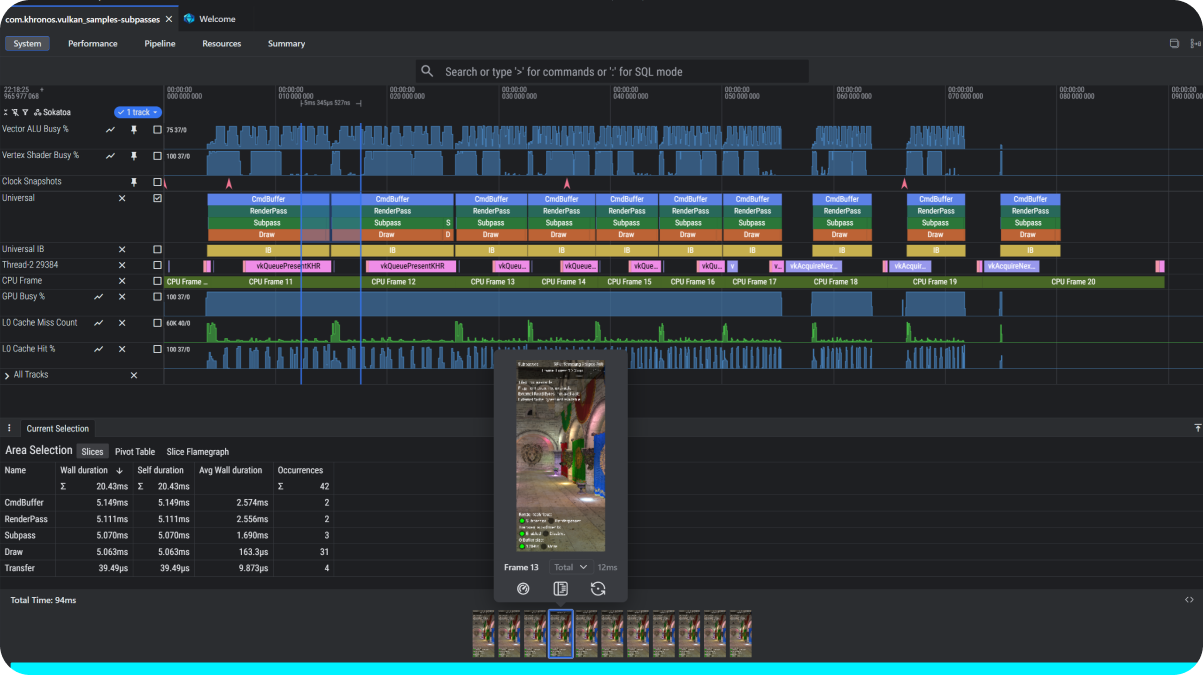
Sokatoa's System View showing a multi-frame GPU capture timeline - built on Eclipse Theia
Enterprise engineering has produced an equally diverse set of adopters. Neuron Automation (formerly logi.cals) built Neuron Smart Engineer on Theia, combined with Eclipse GLSP, delivering IEC 61131-3 industrial programming environments in the browser. AMD ships with Vitis IDE an end-to-end application development environment based on Theia. Lonti migrated Martini Designer from Eclipse RCP to a unified cloud and desktop IDE combining API integration, low-code workflows, and traditional coding. IBM and HCL's Code RealTime runs its cloud version exclusively on Theia. MVTec's HDevelop EVO brings machine vision tooling to the platform, and Smartface IDE extends it into cross-platform iOS and Android mobile development.
Education rounds out the picture. TU Munich's Artemis delivers browser-based, zero-install programming environments for university students. KillerCoda integrates Theia into interactive Linux and Kubernetes learning labs. Coding Park introduces younger learners to Python through game-based cloud IDEs. From research institutions to primary schools - the same platform underneath.
And these are only a selection of the publicly known adopters. Because of Theia's permissive open source license and white-label flexibility, many more tools run quietly on the platform - commercial products where the Theia foundation is simply invisible to end users, as it should be.
Join the story
Theia is more than a platform - it is an open community and a growing ecosystem. It sits at the center of a composable, vendor-neutral developer tools stack from the Eclipse Foundation, alongside complementary projects like Eclipse GLSP, Langium, and CDT Cloud. For organisations that require full control over their data, infrastructure, and toolchain, this stack represents something genuinely new in the developer tools landscape.
The best way to understand what Theia can do is to try it. Download the Theia IDE, explore the platform, or browse the source. If you have questions, the community discussion forum is active, and no question goes unanswered. Developers are welcome to join the weekly developer calls to connect directly with the people building Theia. And if you need professional support or sponsored development, a network of supporting companies is ready to help.
Theia is governed as a true open source project under the Eclipse Foundation's Cloud DevTools Working Group, a neutral home that ensures no single vendor controls its direction. That governance is part of what makes it a safe long-term bet.
The community gathers in person at Open Community Experience (OCX) 2026, taking place on 21-23 April at The EGG in Brussels. Registration at OCX is open. Whether you are evaluating Theia, building on it, or simply want to see what is coming next, we hope to see you there.
About the Author

Jonas Helming
Jonas Helming is a principal architect at EclipseSource, providing consulting and implementation services for tailored AI-native tools and IDEs, as well as technologies such as Eclipse Theia, VS Code, Theia AI, Eclipse GLSP, CDT Cloud, and Theia Cloud.