

In our previous newsletter, we detailed the successful architectural porting of the Ionic/Capacitor and Tauri frameworks to the OpenHarmony operating system. This achievement was pivotal for the Eclipse Oniro ecosystem, lowering the barrier for millions of existing applications to migrate to this emerging platform. However, the most disruptive aspect of this project wasn't just what we built, but how we built it.
Traditionally, porting complex, cross-language frameworks to an entirely new OS, rewriting the native bridge, establishing the build systems, and building the CLI adapters is a monumental undertaking. It typically requires months of deep platform engineering by specialised teams. For this initiative, however, production-ready ports of both frameworks were achieved in a matter of weeks, driven by a single developer.
This drastic acceleration was made possible by "Vibe Coding", a methodology that leverages AI agents not merely as sophisticated autocomplete tools, but as autonomous engineering partners orchestrated by a human Technical Director. This approach represents a fundamental paradigm shift in software development, redefining the relationship between human expertise and automated execution in high-stakes system integration.
Moving beyond "smart autocomplete"
"Vibe coding" is a term often trivialised, dismissed as simply asking a chatbot to churn out boilerplate scripts. This dismissal misses the profound strategic shift occurring in development workflows. In the context of complex system integration, vibe coding is not about the AI writing code in a vacuum; it is about strategic orchestration.
The human developer provides the architectural vision, platform constraints, and deep domain expertise. The AI agents handle the iterative implementation, logic translation across languages (e.g., from Android’s Java to OpenHarmony’s ArkTS), and the exhaustive, repetitive work required to build bridges across kernel boundaries.
This approach transforms the role of the senior engineer. The focus shifts from the minutiae of syntax and API endpoints to high-level system architecture and verification strategy. The engineer stops being the primary writer of code and becomes the Director, orchestrating a symphony of AI agents to accelerate complex technical goals.
The multi-agent workflow: Decomposing the complexity
The success of this accelerated port relied on a structured, multi-agent workflow. AI agents cannot guess platform architecture or guess the quirks of a new OS; they must be provided with context. The methodology was broken down into distinct, manageable phases:
Phase 0: Deep research and context establishment
Before a single line of code was generated, massive amounts of documentation had to be digested. We utilised Gemini 3 Pro, leveraging its extensive context window, to analyse thousands of pages of OpenHarmony documentation, SDK references, and community research.
The output was not code, but exhaustive strategy documents: a 40,000-word technical plan for Capacitor and a similar deep analysis for Tauri. These documents mapped OpenHarmony's concepts (like the Stage Model and UIAbility lifecycle) to their Android and iOS equivalents, established the bridge architecture, and outlined security models. These research documents became the AI agents' "single source of truth"—the fundamental law they were required to follow during the implementation phase.
Phase 1: Atomic decomposition
With the research complete, a different agent was tasked with breaking the strategy down into granular, actionable implementation plans. This is a critical step: architectural goals must be decomposed into well-defined engineering tasks.
What fails is a nebulous prompt like "Port Capacitor to OpenHarmony." What succeeds is an atomic task: "Implement a NAPI bridge for onInterceptRequest that serves files from the rawfile/www directory." Each task included explicit exit criteria and status reports, turning a daunting migration project into a manageable sequence of distinct, verifiable steps that an AI agent could execute.
Phase 2: Building the "self-healing" loop
The true breakthrough, however, wasn't just asking for code; it was giving the AI agents the ability to verify and fix their own work autonomously. This was achieved by establishing a "self-healing loop."
Instead of simple code generation prompts, the AI was given executable verification scripts. The prompt was structured as: "Inside this directory, run the build and deploy commands. Analyse the native hilog output, resolve any lint errors or runtime crashes, and iterate until the app renders correctly on the device."
This turned a passive generator into an active troubleshooter. The AI agent could execute the loop (build → deploy → analyse logs → diagnose → fix → repeat) autonomously. It iterated through 5–10 cycles of this loop to resolve issues like strict-mode violations in ArkTS, missing imports, and runtime type mismatches, all without human intervention. This capability is what compressed months of effort into weeks.
The critical role of "system intuition"
While this workflow is highly automated, it is not autonomous. Human expertise remains irreplaceable, specifically in providing "system intuition." The AI excels at scaffolding and logic translation, but it struggles with deep platform quirks that aren't well-documented.
A stark example occurred during the Ionic port: binary data corruption. While text-based plugins worked flawlessly, images and binary files rendered as blank screens. Log analysis showed standard 200 OK responses; everything looked theoretically correct, and the AI was unable to diagnose the issue.
The "human in the loop" identified the root cause: an API mismatch. OpenHarmony’s WebResourceResponse requires an ArrayBuffer for data, but the resource management API returned a Uint8Array. Passing the Uint8Array directly silently corrupted the data rather than throwing an error. The fix was a single line of code, but diagnosing it required deep system intuition. Once the human provided this critical technical nuance, the AI was instantly able to refactor all related file-serving code paths across the entire project.
Document and tool first: The new developer experience
A framework port is useless if other developers cannot use it. The initiative prioritised the developer experience from day one. The AI was not just used to build the runtime bridge; it was instrumental in building the tooling multiplier.
We utilised the agents to create the complete CLI adapters, ensuring that the standard developer workflow ("add platform," "sync assets") was polished and intuitive. Tooling is often deferred in major engineering projects, but in this accelerated model, the AI allowed us to build the tools concurrently with the core technology.
Furthermore, we reinforced that documentation is oxygen for AI. If a documentation pattern was broken, or a specific quirk was found, the primary action was not to fix the code, but to update the research document (the "single source of truth"). This ensured that future AI tasks would benefit from that discovered knowledge, reinforcing the intelligence of the entire system.
Conclusion: The orchestrated future
The accelerated porting of Ionic and Tauri to OpenHarmony demonstrates that the future of software engineering, particularly for strategic ecosystems like Eclipse Oniro, is about orchestration, not just authorship.
By combining the strategic oversight and system intuition of a human director with the relentless execution of autonomous AI agents, we have proved that massive engineering programs can be compressed into intensive, high-output sprints. This methodology allowed us to bring two foundational cross-platform frameworks, representing both web-native and compiled-native paradigms, to a completely new OS in a fraction of the time traditionally required.
The results are production-ready ports and a functional development ecosystem. This project serves as a proof of concept for the new paradigm: the future isn't just coded; it's orchestrated. For the Eclipse Foundation community, this methodology opens new avenues for rapid ecosystem development and technical integration.
About the Author
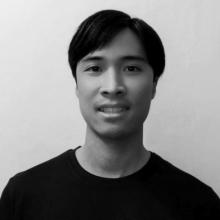
Francesco Pham
Francesco is an Open Source Software Engineer, PMC Lead, and Committer Representative for Eclipse Oniro, dedicated to shaping the future of open source mobile and IoT platforms. Specialising in extending the OpenHarmony-based OS for global markets, his work emphasises privacy, openness, and European regulatory compliance through key collaborations with partners like Bosch and Volla. A frequent speaker at prominent industry conferences such as SFSCON and FOSDEM, Francesco actively drives core technical innovations within the Oniro ecosystem—ranging from device and cross-platform framework porting (including Tauri and Capacitor) to developing the Oniro IDE and managing vital CI/CD infrastructure.