

The automotive industry is undergoing a profound transformation. Vehicles are increasingly defined by software, data, and connected services rather than mechanical systems alone. This evolution toward Software-Defined Vehicles (SDV) is reshaping how vehicles are designed, developed, and maintained.
Eclipse SDV is one of the leading open source initiatives supporting this transformation. By bringing together automakers, suppliers, and technology providers, it promotes a modular and vendor-neutral ecosystem for next-generation vehicle software platforms.
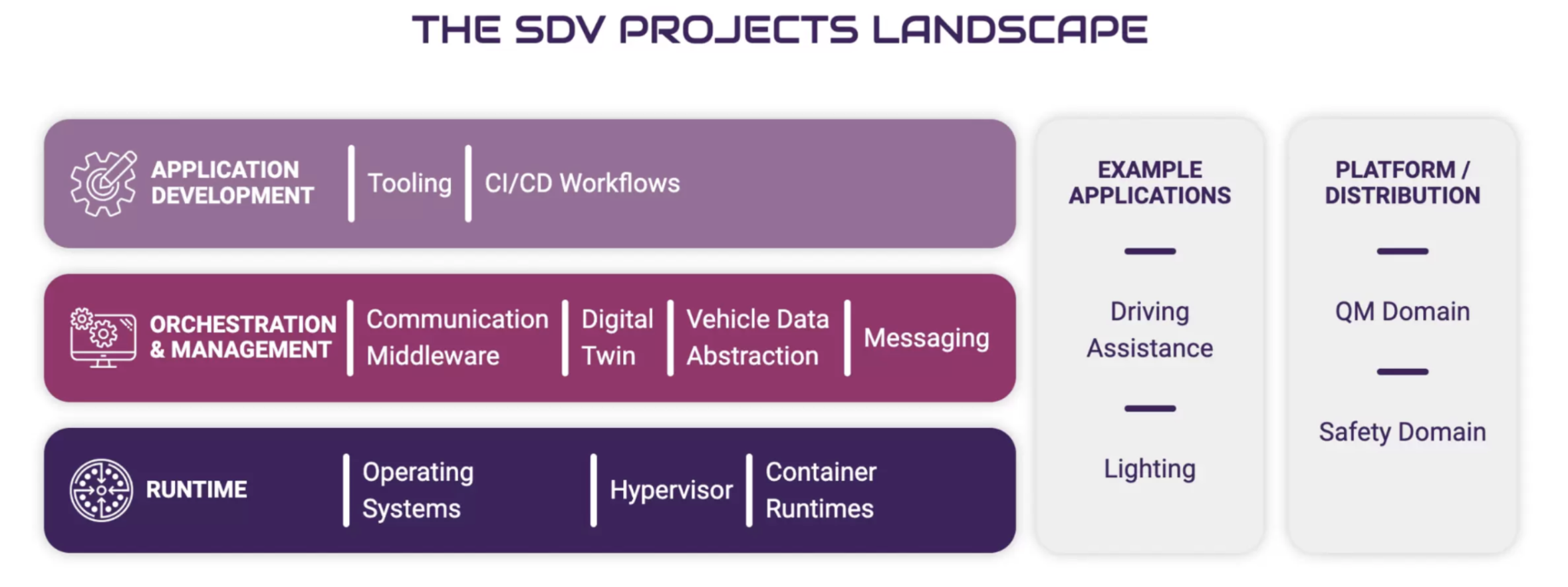
As software platforms evolve continuously through iterative development cycles, maintaining a consistent understanding of the overall system becomes increasingly challenging. Software, hardware, services, safety constraints, and operational behaviors must evolve together across multiple teams and disciplines.
MBSE as a complement to SDV engineering
Traditional document-based engineering approaches quickly become difficult to maintain in highly iterative SDV environments. Specifications are fragmented across teams and tools, making impact analysis and system consistency harder over time.
MBSE addresses this challenge by introducing system-level models that capture requirements, functions, components, interfaces, and constraints in a consistent way.
These models help engineering teams:
- maintain a global view of the system,
- understand dependencies between components,
- assess the impact of changes,
- support traceability across the lifecycle.
They also provide multiple views adapted to different engineering concerns, from operational analysis to architecture definition and validation.
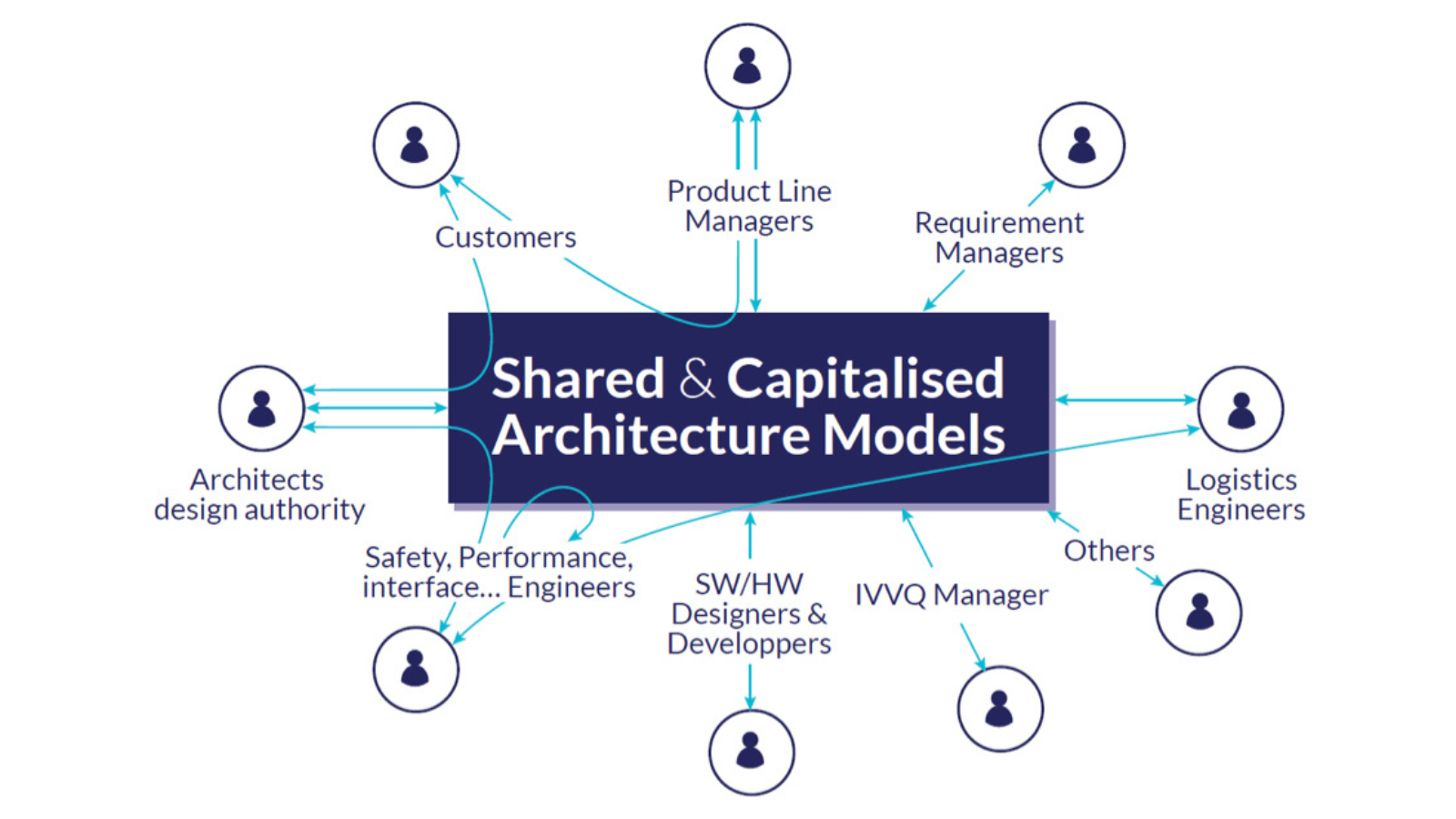
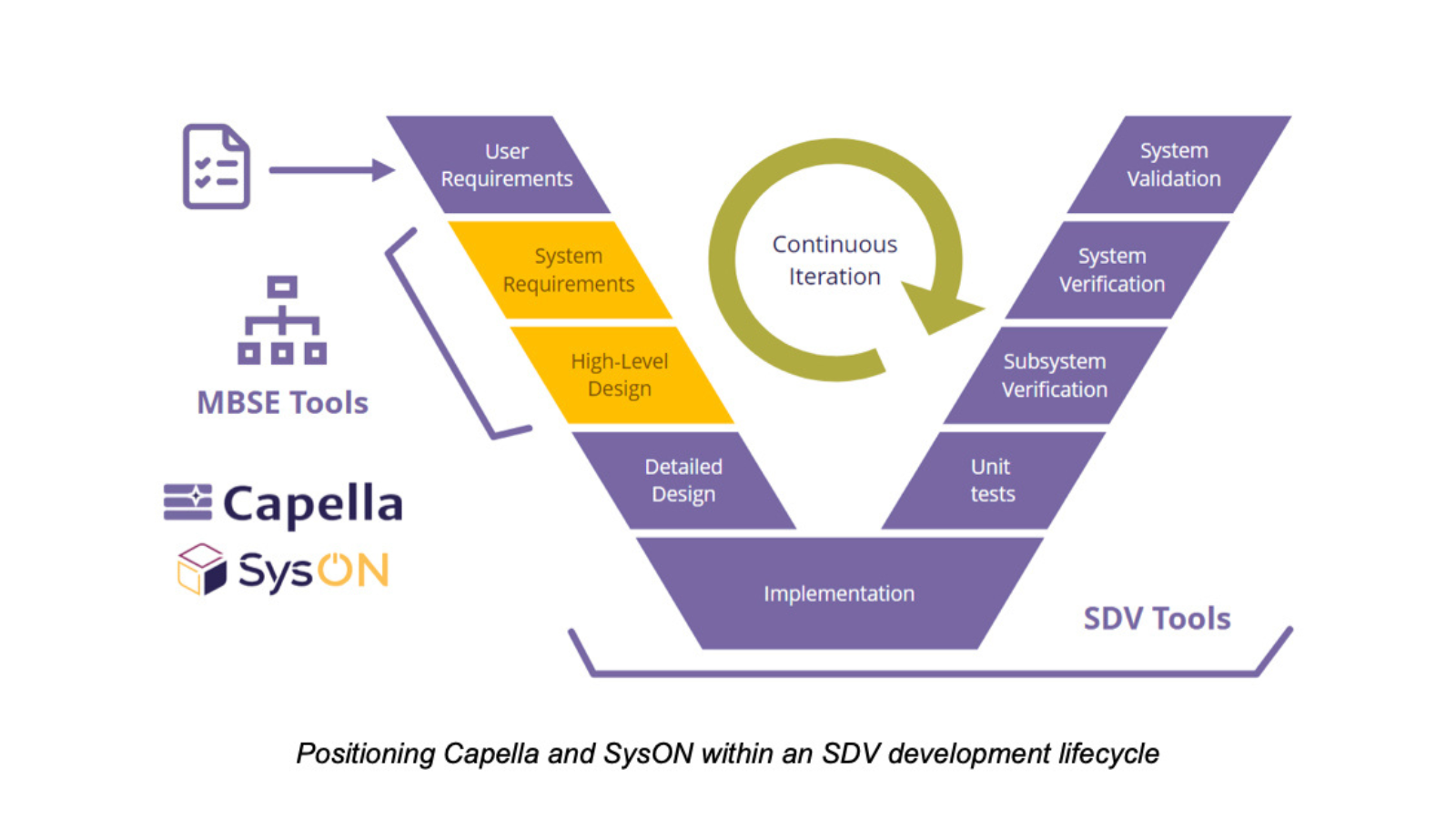
MBSE does not replace code-first SDV approaches. Instead, it complements them by providing a stable architectural perspective while implementations evolve continuously.
This is particularly useful during early engineering phases, where key architectural decisions must be made before implementation, but also during iterative development and validation activities.
Using the SDV Companion Application example, the rest of this article illustrates how the Arcadia methodology and the Eclipse Foundation MBSE tools Capella and SysON can support SDV engineering.
The Arcadia methodology
Beyond modeling languages, MBSE also requires a methodology capable of guiding architects through the specification and validation of complex systems.
Arcadia is a public MBSE methodology originally developed by Thales and now used across multiple industrial domains, including automotive.
It structures systems engineering around three complementary activities:
- understanding stakeholder needs,
- building and validating the architecture,
- managing requirements consistently throughout the lifecycle.
Arcadia guides engineers progressively from operational analysis to system architecture and design while maintaining links between requirements, functions, components, and interfaces.
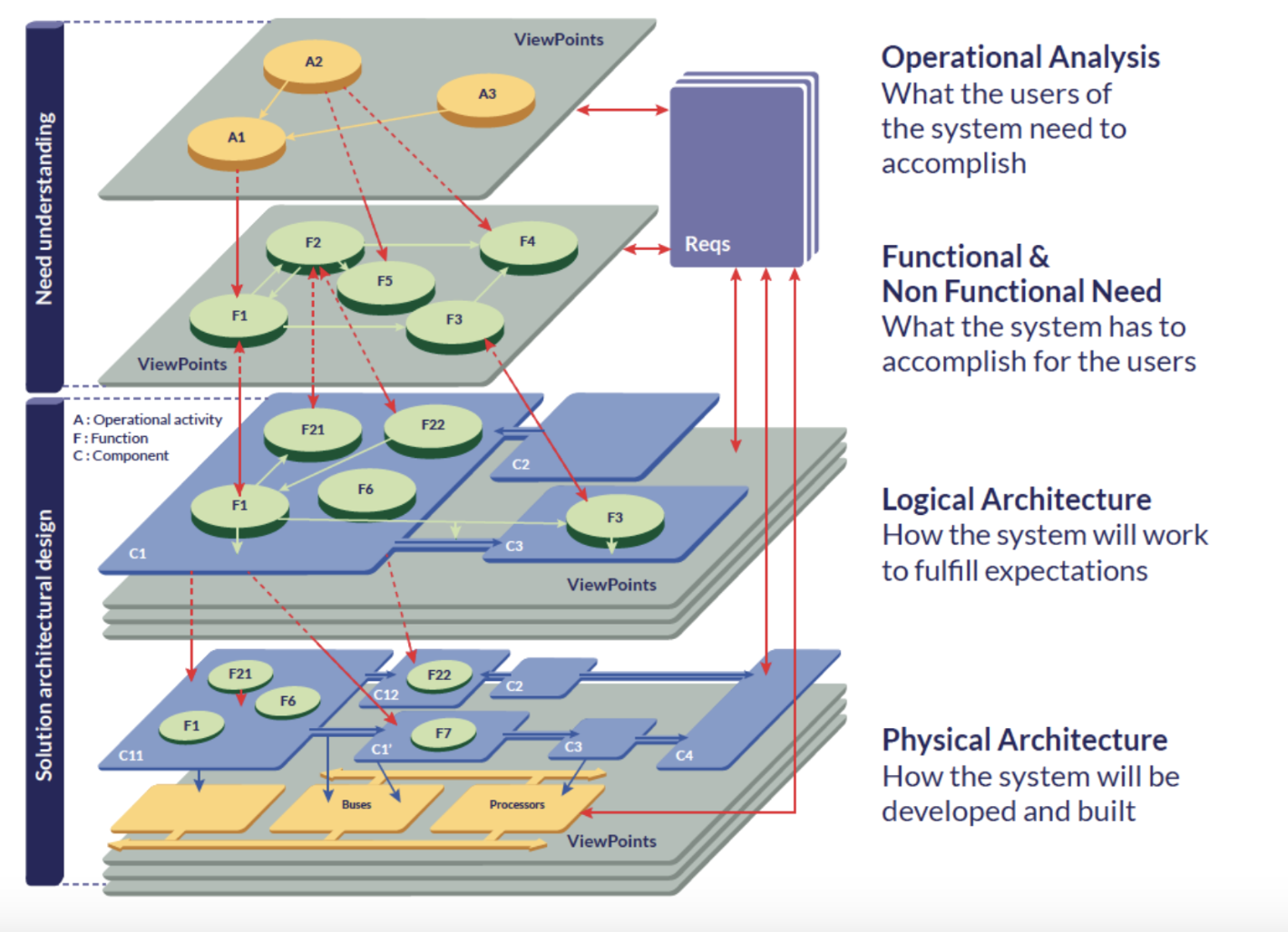
Arcadia Methodology
This helps identify interfaces and responsibilities early, reducing integration risks and clarifying architectural decisions before implementation.
For SDV initiatives, this is particularly valuable because functions, interfaces, and components become long-lived engineering assets that evolve alongside rapidly changing software implementations.
Today, Arcadia is implemented by Capella, an open-source Eclipse project. Ongoing work around SysON also explores how Arcadia concepts can be supported using the emerging SysML v2 standard.
Capella within the Eclipse SDV Blueprints
The Eclipse SDV Blueprints initiative provides concrete examples showing how Eclipse technologies can support SDV development.
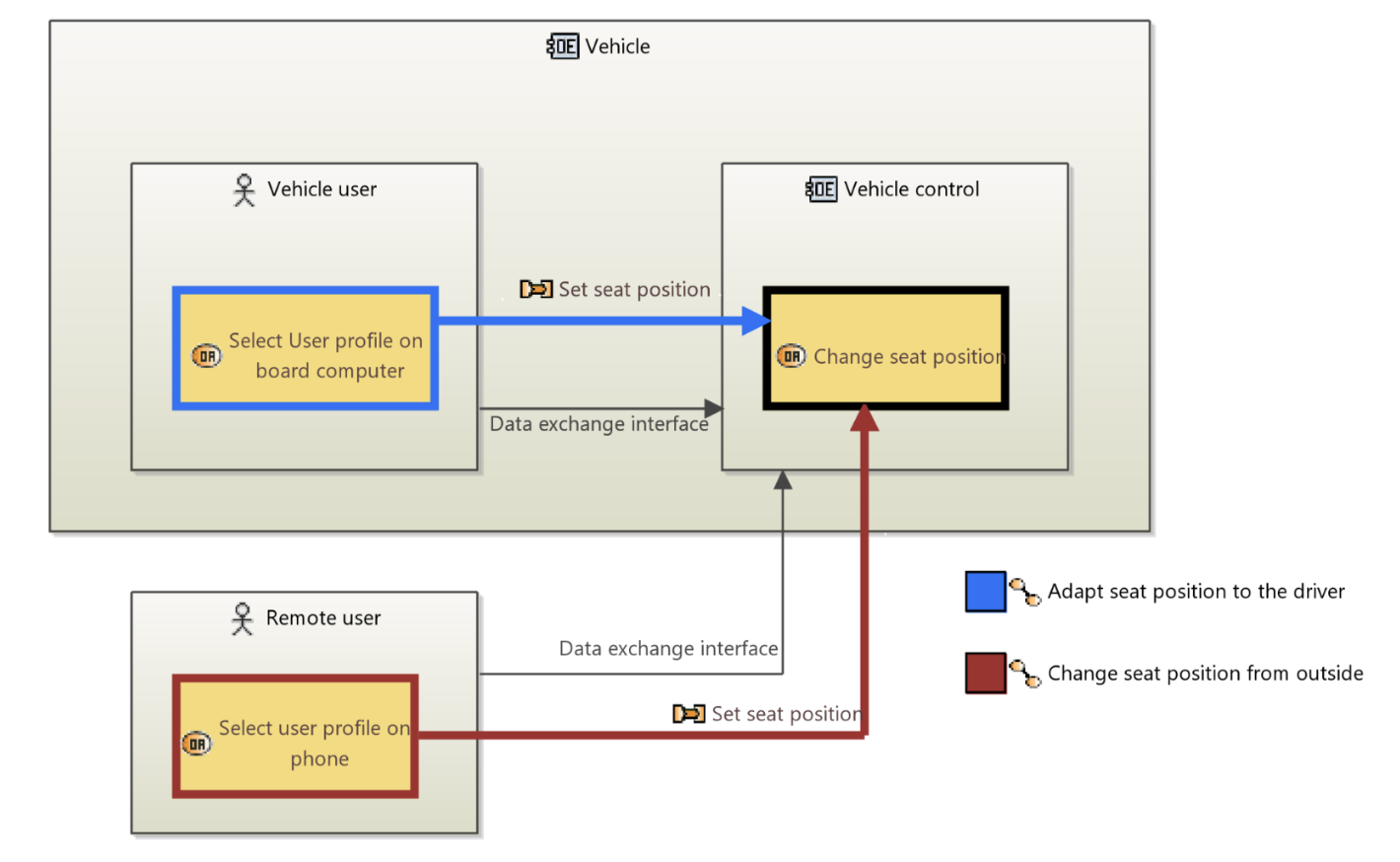
Within this initiative, Capella has been used to model the architecture of the SDV Companion Application, a demonstrator showcasing the development of an application for interaction with a vehicle, for example to adjust the position of a seat.
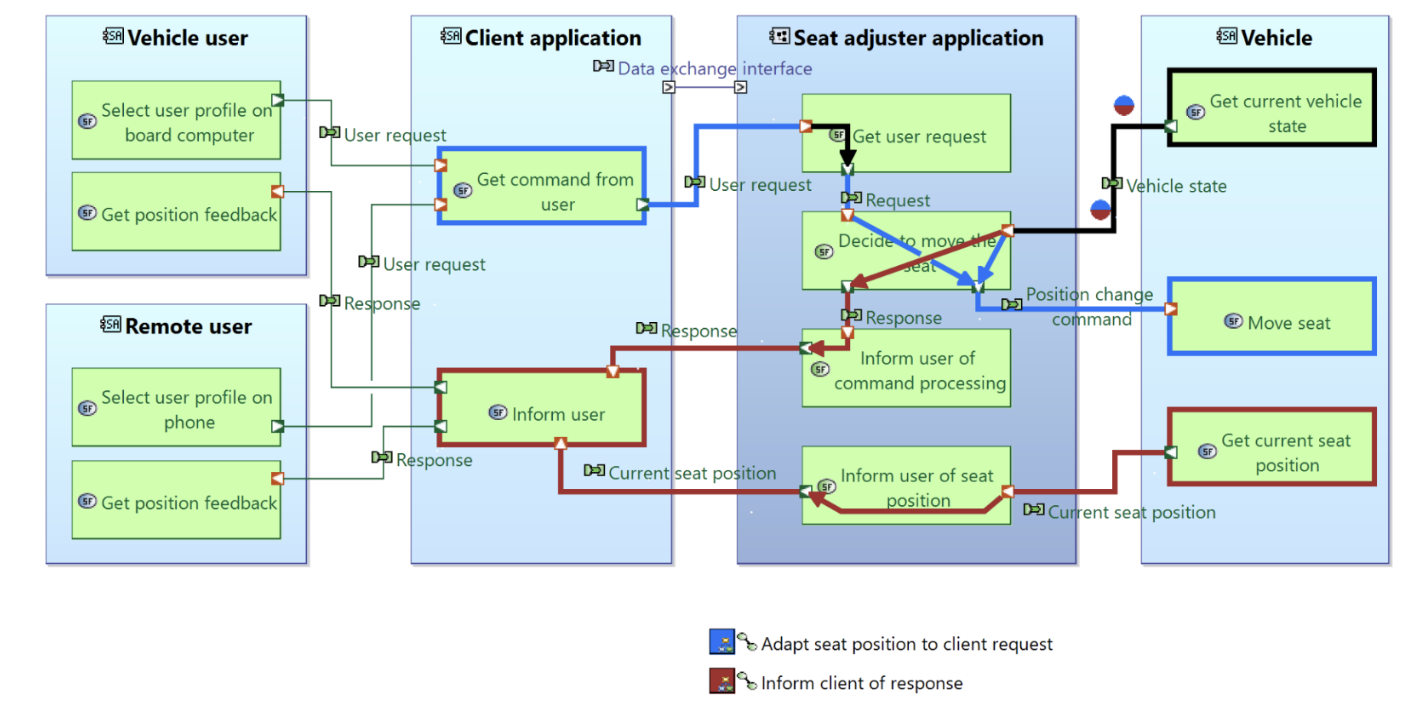
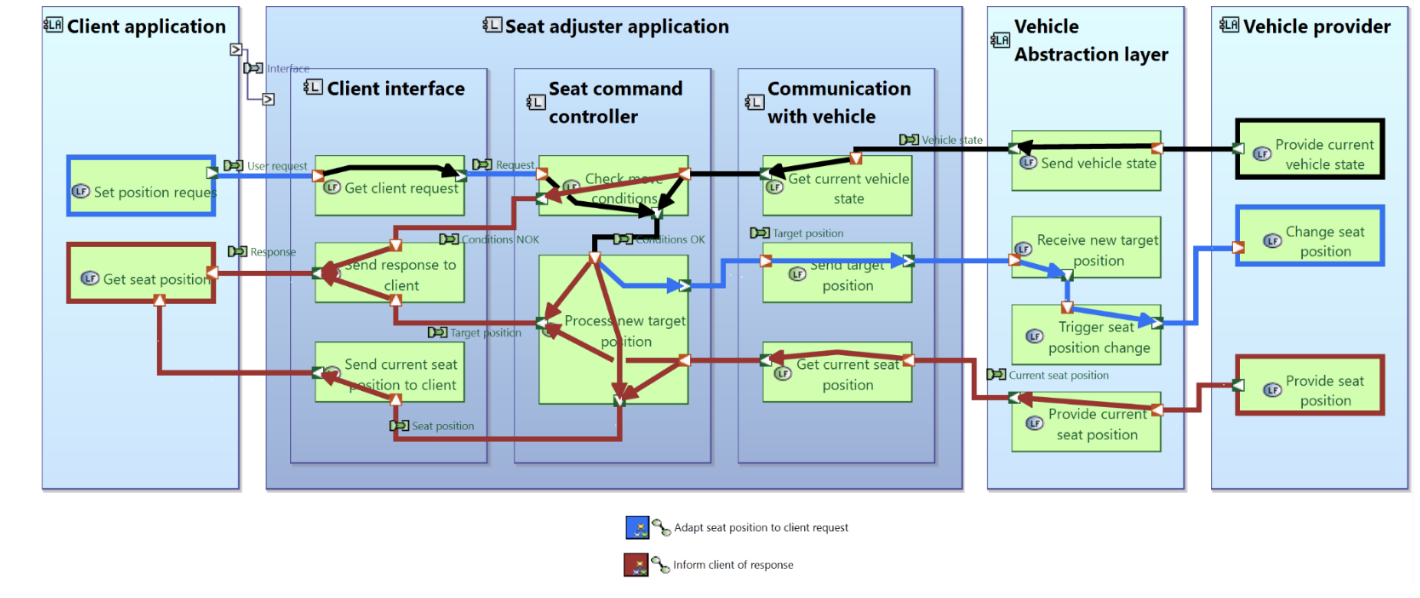
The use-case illustrates how MBSE can be used to describe a vehicle function from operational interactions down to implementation-oriented architecture elements.
Using Capella and Arcadia, the system is structured across several architectural layers.
Operational Analysis captures user needs and operational interactions:
System Analysis defines the main system capabilities and boundaries using a black-box approach:
Logical Architecture structures the solution into logical components and interfaces:
Finally, Physical Architecture maps these elements toward implementation-oriented structures.
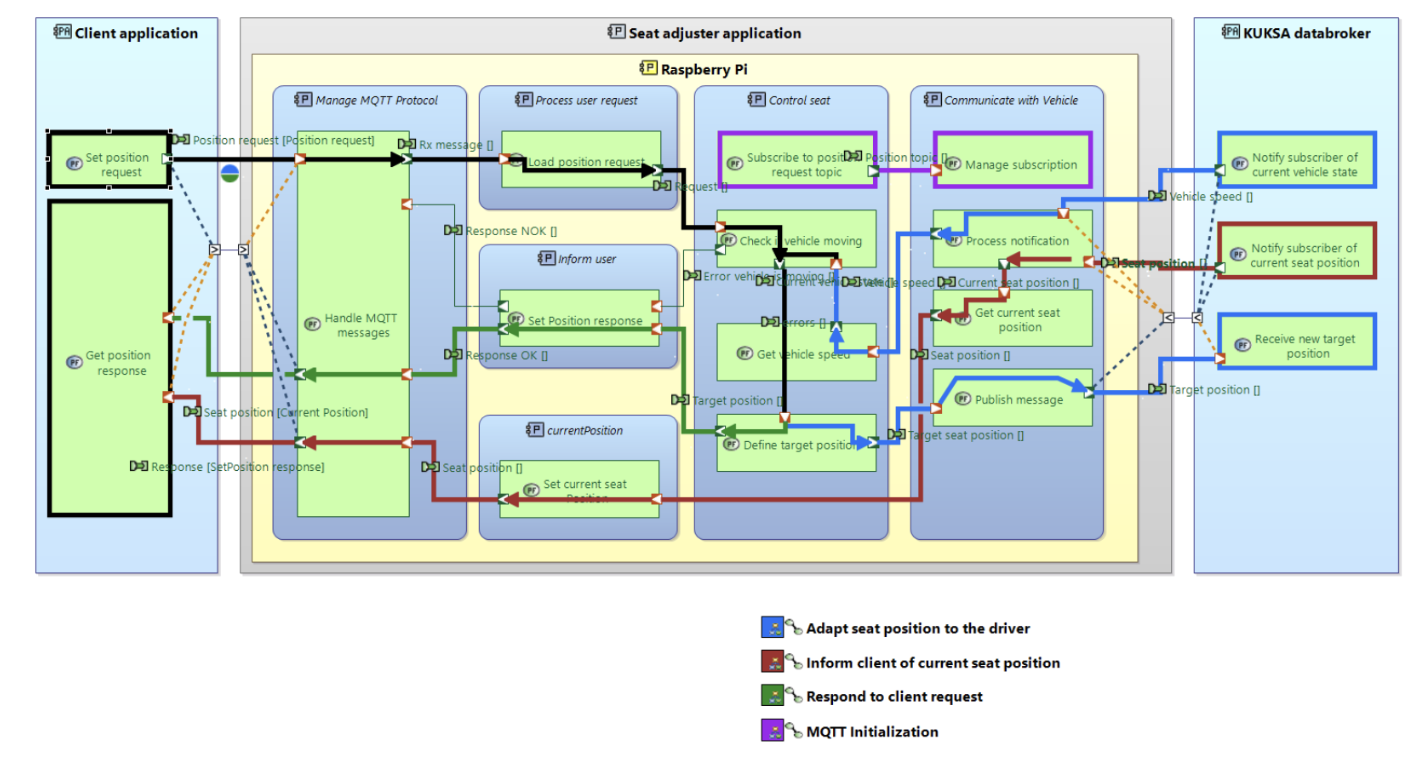
This layered approach helps maintain a clear separation between engineering concerns while preserving a consistent understanding of the system as it evolves.
SysON and SDV with SysML v2
SysON is an open-source MBSE solution, also an Eclipse project, developed by Obeo and based on the emerging SysML v2 standard.
Designed as a modern web-based modeling environment, SysON aims to improve accessibility, interoperability, and collaboration in systems engineering. It leverages key SysML v2 capabilities, including standardized APIs and support for both graphical and textual modeling.
Using SysML v2, it is possible to represent the architecture of the SDV Companion Application both graphically and textually.
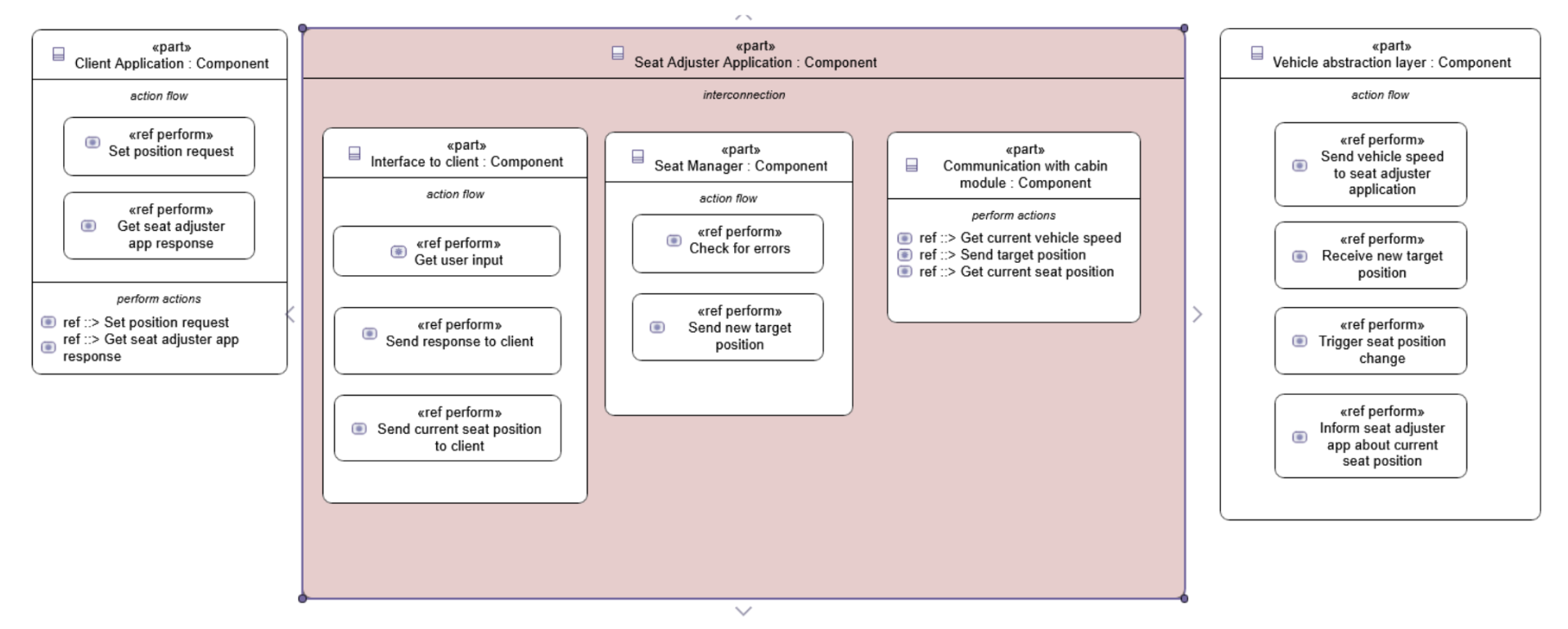
SysML V2 diagram
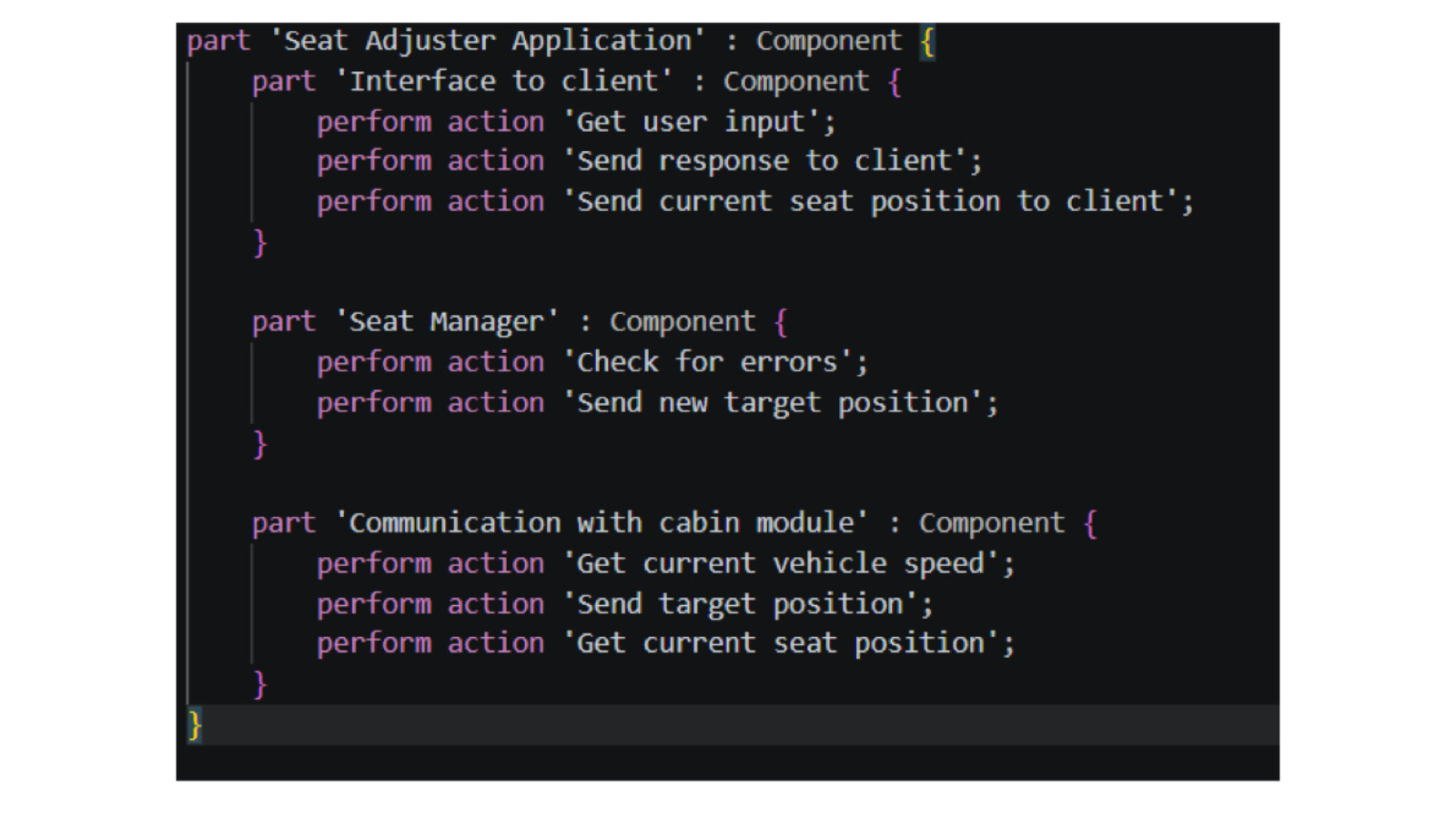
SysML V2 textual syntax
One of the key strengths of SysML v2 is its extensibility through domain-specific libraries. In this context, an Arcadia library can be implemented using SysML v2 concepts, allowing engineers to model systems according to the Arcadia methodology while benefiting from SysML v2 interoperability mechanisms.
An extension of SysON also enables diagrams resembling native Capella diagrams. This makes it possible to model the same SDV Companion Application architecture in SysON while preserving the Arcadia engineering approach.
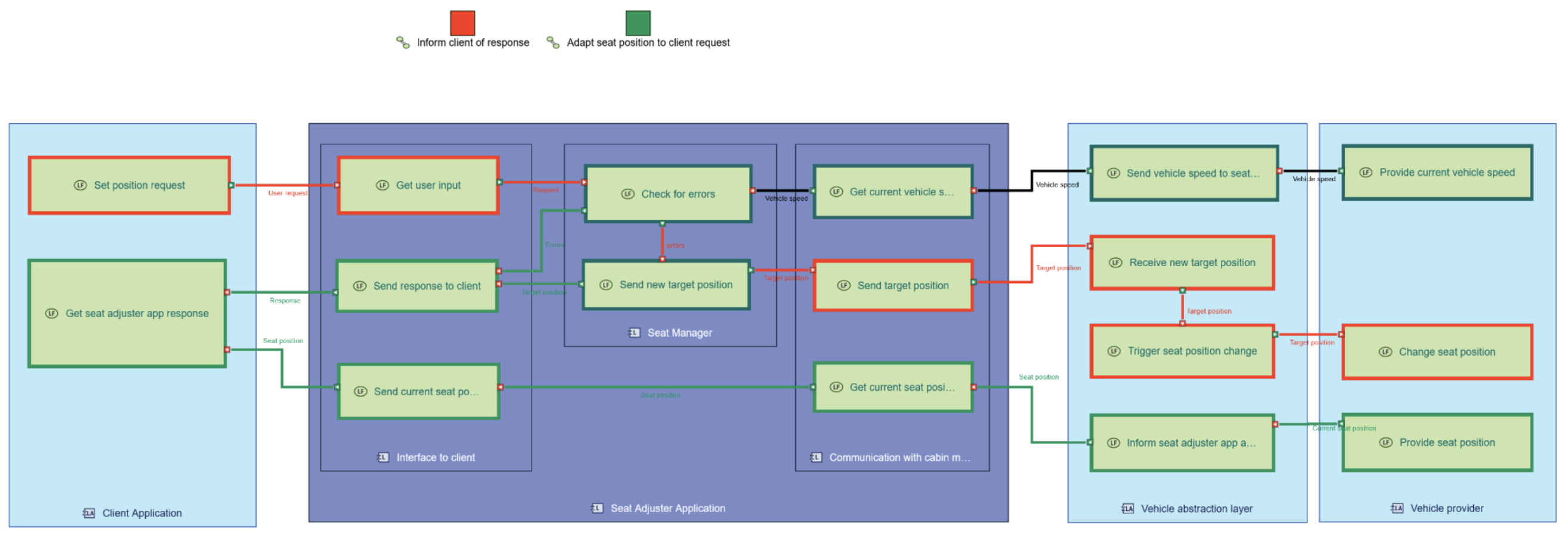
SysML v2 model represented with an Arcadia diagram
This combination brings together the methodological maturity of Arcadia and the interoperability capabilities introduced by SysML v2.
Conclusion
Software-Defined Vehicles require engineering practices capable of managing continuous evolution across software, hardware, services, and system architecture.
In this context, MBSE complements code-first SDV approaches by providing a system-level understanding of the vehicle and its architecture throughout iterative development cycles.
Capella and SysON illustrate how this approach can be applied within the Eclipse SDV ecosystem. Through the SDV Companion Application example, they show how architecture models can support SDV engineering while remaining aligned with modern software-centric development practices.
About the Author

Martin Le Bourgeois
Martin Le Bourgeois is a Business Developer at Obeo, specialising in Model Based Systems Engineering (MBSE). He supports organisations in adopting open source engineering solutions based on Capella, SysON, and open standards such as SysML v2.