Five ways to be part of OCX 2027: Connect, contribute, and collaborate
Open Community Experience (OCX) returns to Brussels from 13 to 15 April 2027.


Open Community Experience (OCX) returns to Brussels from 13 to 15 April 2027.
What is the value of open source in an age when AI writes all the code?

Registration for Open Community Experience (OCX) 2027 is now open. OCX is the Eclipse Foundation's flagship annual open source developer conference, bringing together developers, maintainers and open source communities from across Europe and beyond.

On Tuesday 27 October 2026, Code & Compliance returns to Maison de la Poste in Brussels for a full day of discussions on what regulations like the Cyber Resilience Act (CRA) and AI Act mean for open source software and the products built on it.
More than 300 definitions, 13 chapters, two languages and an open licence. Led by the Embedded France association, the French embedded‑systems community is releasing a structured reference vocabulary, contributing to a shared European language for embedded AI.
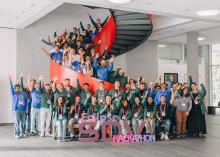
From 6–8 October, 2026, we brought together 57 developers, students, automotive professionals, and open source enthusiasts at Zeppelin University in Friedrichshafen, Germany, for Eclipse SDV Hackathon Chapter Four, hosted by the ZF Group.
We’re pleased to celebrate an important milestone for four projects in the Eclipse Technology Top-Level Project: Eclipse SW360, Eclipse Tycho, Eclipse Apoapsis, and Eclipse Common Security Infrastructure (CSI).
Our AI-powered AUTOSAR modeling demo from OCX shows how an AI agent can create, connect, understand, and modify graphical models using natural language. Watch the demo to see Eclipse Theia AI and Eclipse GLSP working together in a domain-specific modeling tool.
Dear friends and users,
we are happy to announce the release of SUMO version 1.28.0.
The download links are at https://sumo.dlr.de/Download.
If you cite the new release in your publications, please use the DOI
10.5281/zenodo.23219601 (https://doi.org/10.5281/zenodo.23219601)
This release brings many enhancements and fixes to mesoscopic simulations including an improved jamming model (--meso-ltm).
Eclipse Theia 1.76 introduces GitHub Copilot subscription support in Theia AI, automatic model discovery, AI-generated commit messages, and new APIs for AI sessions. Explore these and many other improvements to the open platform for building cloud and desktop IDEs.
Open source framework brings high-level programming to quantum computing, making complex quantum algorithms easier to build, optimise, and maintain
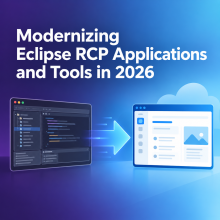
Modernizing an Eclipse RCP application is still a significant re-architecture, but AI-assisted development is changing the economics. This article explores how AI can accelerate codebase analysis, testing, business logic extraction, UI reimplementation, and repetitive migration work and why now may be the right time to revisit an RCP migration strategy.
11 September marked the first Cyber Resilience Act (CRA) deadline and an important milestone for the ORC community’s work. Months of work went into preparing for it, from testing the Single Reporting Platform to building the CRA FAQ and the ORC Learning Hub.
New vendor-neutral initiative brings together an initial community of 17 organisations to connect industry needs with open source AI projects and turn shared expertise into practical guidance for greater choice and control
Taking place 27 October in Brussels, Code & Compliance will examine practical approaches to developing compliant products, navigating evolving European regulatory frameworks including the Cyber Resilience Act (CRA) and AI Act, and strengthening collaboration between manufacturers and the open source ecosystem.
A new article from WELT looks at how the shift towards software-defined vehicles is changing the way automotive manufacturers, suppliers, and software companies approach this question. The article features Ansgar Lindwedel from the Eclipse Foundation and highlights Eclipse S-CORE as one example of this approach: working together directly on open source code for the automotive software foundation.
AI is changing custom tool and IDE development far beyond simply adding an assistant, from designing for AI agents to rethinking UX, architecture, prototyping, and team skills. This updated guide summarizes the key decisions to consider when building modern tools and IDEs in 2026 and is worth a read if you are planning a new tool or evolving an existing one.
EU regulatory frameworks have not always accounted for the unique ways open source software is developed and maintained. The EU AI Act represents progress in recognising open source, but adapting the EU’s regulatory framework to open source in practice remains an ongoing process.