Open VSX and software sovereignty in the era of AI-driven developer tools
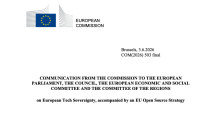
Learn why Open VSX matters from a software sovereignty perspective.
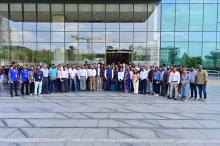
The Eclipse community in India held an event on 19 February 2026 to discuss debugging Java with Eclipse and migrating to the latest Eclipse IDE. Watch the recording to learn more.
Our new article revisits domain-specific AI extensions in VS Code and examines how the editor’s native AI APIs have matured across language models, tools, chat participants, renderers, and MCP integration. It is a useful read for teams deciding between extending VS Code and building fully custom AI-enabled tools on platforms like Eclipse Theia AI.
We’re delighted to welcome a keynote speaker whose experience comes from one of the most demanding and data-driven environments in the world: Formula 1. Join Ruth Buscombe at OCX 2026.
This post looks at how our team is approaching AI-assisted development, and what we want to get right before we move further.
The ORC community has continued refining the attestation concept through working sessions, research, and discussions at Code & Compliance and FOSDEM, including engagement with representatives from BSI and DG-CNECT. As regulatory expectations around the CRA become clearer, we are now able to provide a practical update on how the model is being developed, tested, and refined within the community.
Software bill of materials (SBOM) requirements are advancing rapidly, and the time for “wait and see” is quickly running out. The global regulatory landscape for software supply chain security is shifting from recommendations to mandates, yet many organizations remain unprepared. What you do now will determine whether your company is ready or left behind as SBOM mandates solidify.
Eclipse Theia 1.69 introduces Agent Capabilities - a new abstraction for toggling agent skills without the complexity - alongside smart shell command permissions, Claude Code integration improvements, Thinking Mode configuration, MCP Roots support, and extensive chat UX polish. 88 merged PRs in total.
The European Commission has published its draft guidance for the implementation of the Cyber Resilience Act (CRA) and opened it for public feedback until March 31st. This consultation represents an important opportunity for the open source ecosystem to help refine how the CRA will be interpreted and applied in practice.
In this RedMonk conversation, Kate Holterhoff speaks with Ansgar Lindwedel, Director of Software Defined Vehicle (SDV) Ecosystem Development at the Eclipse Foundation.
On 24-25 February, the first Eclipse SDV Community Days of 2026 brought the community to Bonn, Germany. We've summarised the key takeaways and highlights.
For decades, Java has drawn a clear distinction between primitive types and reference types, with each category following its own rules in the language. One of those rules was simple: instanceof applies to reference types, not primitives. That separation has shaped how generations of Java developers reason about type checks and conversions.
Following a strong presence at FOSDEM and our second Code & Compliance event, conversations around the Cyber Resilience Act (CRA) continue to mature — shifting from awareness to practical implementation. The sessions and workshops helped advance key ORC deliverables, including the voluntary security attestations project and ongoing work around due diligence.
As the Open VSX ecosystem continues to grow, keeping the registry stable is a top priority. Behind the scenes, we are strengthening the infrastructure so that even during peak loads or major provider outages, developer workflows remain uninterrupted.
The Eclipse Ankaios project community announced the general availability of Eclipse Ankaios 1.0.0, the first major stable release.
The Eclipse S-CORE project team has announced the release of Eclipse S-CORE 0.6.0, the third milestone version of its open source automotive middleware platform developed under the Eclipse Software Defined Vehicle (SDV) initiative.
Supply chain security has become a critical topic in the security world in recent years, and while SBOMs are a foundational piece, they are still infrequently generated and even less frequently used in a way that meaningfully improves software supply chain security.
As long as an organisation participates in a single data space, ecosystem-specific trust frameworks work reasonably well: rules are defined, compliance is checked, and trust decisions stay inside a bounded context. The challenge begins when organisations need to operate across multiple data spaces at the same time, a scenario that is becoming the norm rather than the exception.
The adoption of the EU Cyber Resilience Act (CRA) represents a major shift in how cybersecurity responsibilities are defined across the software ecosystem. For the first time, the regulation explicitly recognises Open Source Software Stewards as a distinct category of legal actors, separate from manufacturers, and subject to a tailored set of obligations.